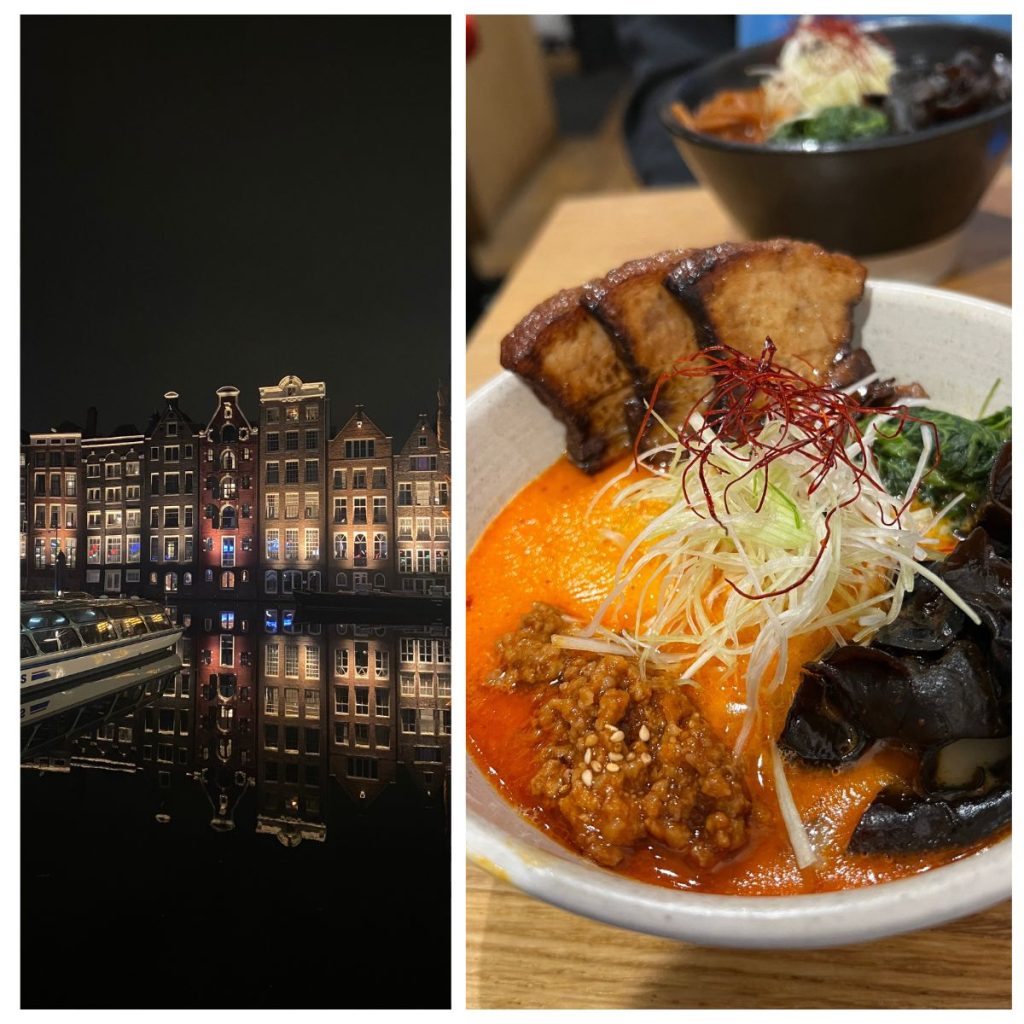

If you’re craving the full Indonesian “rijsttafel” (literally: rice table) experience in Amsterdam, this is for you. We picked restaurants that keep showing up on locals’ radar and that you can realistically visit again, not just once.
We focused on Indonesian spots where a rijsttafel is part of the menu culture—so you can order a set/table for sharing and actually get a good mix of sauces, sambals, and side dishes. And because Amsterdam dining is rarely straightforward: you’ll also find clear guidance on meat vs vegetarian vs seafood, plus how to split it without everyone eating the same 2 dishes.
5 Reliable Rijsttafel Spots in Amsterdam

1. Tempo Doeloe – City Centre
Tempo Doeloe is one of the most dependable choices when you want a “proper” rijsttafel, the kind where the table keeps filling and the flavours stay cohesive. It’s a strong pick if you’re going with friends who all eat different things—because you can usually guide the mix with the dishes you choose.
For a meat-focused rijsttafel, ask for a balance of slow, darker flavours (think rendang/semur-style profiles) and lighter, coconut-based curries. For the spicy kick, don’t be shy about adding sambal on top of the rice.
Vegetarian? Look for tempeh/tahu options and vegetable curries (often served alongside or swapped into the rijsttafel). If they offer a vegetarian rijsttafel, start with the “comfort” dishes first (creamy curries, sautéed vegetables), then add the sambal for contrast.
Good to know: If you’re sharing, decide early who wants “spicy-first” vs “mild-first”—it helps you order (and allocate) sambal and fried sides so the whole table stays happy.
2. Puri Mas – Amsterdam
Puri Mas is a classic go-to when you want Indonesian food that doesn’t feel like a tourist performance. Their rijsttafel tends to work best when you’re treating it like a family-style meal: rice as the base, multiple small dishes to taste, and lots of contrast.
For meat-eaters, aim for a variety: one rich beef (or beef-style) dish, one chicken dish, and a saté/sauté item if it’s on the set or available as an extra. That mix makes the meal feel rounded instead of repetitive.
Seafood lovers should ask what’s currently included in their seafood-friendly options. In Indonesian menus, seafood often shows up as prawns/udang or fish/ikan prepared in a spicy-sweet sauce or sambal-based gravy—so ask whether the seafood is saucy (good with rice) or more grilled/fried (good with sambal).
If you’re vegetarian, use the ordering moment to confirm the proteins (tempeh/tahu) and whether the sauces contain animal stock. A good vegetarian rijsttafel should still feel “complete,” not just like a few vegetable sides.
Good to know: When you order rijsttafel, ask whether everything comes to the table at once or in courses—this affects sharing, especially if you’re trying to keep things warm.
3. Selamat – Amsterdam
Selamat is a smart choice if you like your rijsttafel a bit more “authentic in flavour” and less about presentation tricks. It’s often the kind of place where you can have a proper meal without overthinking it: you order, you share, you taste across savoury, spicy, sweet, and creamy.
For meat, it usually pays off to build your table around contrast. Pair a darker, caramelised dish (often beef-based) with something lighter and aromatic, and then add a sambal-forward element for bite.
For seafood, this is a good place to ask direct questions: whether the fish is cooked in sauce (best for rice) and whether the prawns are included as a main dish or as part of a mixed plate. If you’re ordering with mixed preferences, make sure at least one seafood dish sits “in the centre” of the table so everyone gets it.
Vegetarian? This is where you should check for tempeh/tahu and vegetable curries that have real body—coconut-based sauces, thick gravies, and sautéed vegetables with punchy spices. If the menu shows gado-gado (usually peanut sauce with vegetables), treat that as your “texture anchor.”
Good to know: Ask what’s “extra” that they recommend with the rijsttafel (often saté, crackers/kerupuk, or an extra sambal). Extras can be more efficient than ordering a whole second set.
4. Tjendana – Amsterdam
Tjendana is a solid option when you want the classic Dutch-Indonesian “ri-jam” feeling: lots of dishes, lively sharing, and flavours that go from savoury to spicy without losing balance. It’s a good pick if you’re not just looking for one highlight dish, but for a whole spread.
For meat-first tables, consider ordering for range rather than for “one type” of dish. If you eat pork, ask if any dishes include babi (pork-based) flavours like ketjap-style sauce—otherwise stick to beef/chicken items. Either way, aim for at least one rich gravy and one crisp/fried element so the meal has both depth and texture.
Seafood works best when it’s saucy. Ask if there’s an udang/ikan dish in the rijsttafel set (or if it can be swapped in). If you don’t eat shellfish, confirm the exact seafood type so you’re not surprised.
Vegetarian diners should ask how vegetarian dishes are prepared. Many Indonesian kitchens use flavours like shrimp paste (belacan) even when a dish looks “vegetable.” A quick question saves you from guessing.
Good to know: If you’re sharing with mixed diets, put the vegetarian dishes on one side of the table and the meat/seafood on the other—people reach less, waste less, and you avoid accidental mixing.
5. Moesson – Amsterdam
Moesson is a good “group dinner” pick when you want Indonesian food that feels comfortable and lively, but still serious enough about flavour for a rijsttafel evening. It’s especially handy if you want a straightforward way to get a variety without turning it into a project.
For meat, ask for a rijsttafel mix that includes both grilled/fried items (often where saté or fried sides show up) and saucy curries (where rice really shines). That way, each person can choose based on mood.
For seafood, treat Moesson as a “menu-reader” situation. Ask which seafood options are available for that day’s rijsttafel (or whether you can adjust the set). Seafood in Indonesian cooking usually benefits from sambal or sweet-spicy sauce—so if you’re ordering, prioritise dishes that go well with rice rather than just crispy sides.
Vegetarian ordering is easiest when the restaurant offers a vegetarian rijsttafel. If not, build it by choosing dishes with tempeh/tahu and vegetable curries. Ask for peanut-based dishes (if available) and make sure there’s enough variety so it doesn’t feel like only “one kind of sauce.”
Good to know: Go for a small “order strategy” before you sit down—pick 1–2 “must try” dishes, then fill the rest with the chef’s suggested mix so you’re not stuck hunting for variety mid-meal.
What to order (meat, vegetarian, seafood) and how to share like a local

A rijsttafel can feel like a lot—because it is. The trick is to treat it like a tasting menu for the table: you’re not trying to finish everything individually, you’re trying to experience a spectrum.
The sharing rule (so nobody gets stuck)
First, check whether the restaurant uses a “set rijsttafel” (often delivered as a bundle of dishes) or a “choose-your-own” style where you pick components. Sets are usually best for groups, because you can focus on dietary needs instead of micromanaging every dish.
For sharing, decide this upfront:
- If you’re with 2–3 people who love variety: one rijsttafel set can work, but add an extra side if you’re hungry.
- If you’re with 4 people: plan on either one set for everyone to taste from or two smaller orders (depending on dish size). The goal is that each person gets at least a few rounds of “new” dishes.
Also, don’t spread everything across the table. Put the rice at the centre, then group dishes by type: saucy curries on one side, sambal/fried/crispy on the other. It keeps the meal flowing.
What to order for a meat rijsttafel
When meat is your priority, aim for variety in preparation styles.
A good “meat spectrum” usually includes:
- One rich, slow-cooked dish (rendang or semur-style profiles; often beef or another deep-flavoured option)
- One chicken dish (often a coconut-based curry or tamarind/sweet-spicy profile)
- One saté/savoury fried element (so there’s texture contrast)
- A sambal dish (spice and heat should be intentional, not accidental)
If your group has both spice lovers and spice avoiders, order the sambal separately (or ask for it on the side) so people can control their own heat.
What to order for vegetarian rijsttafel
Vegetarian rijsttafel can be excellent in Amsterdam, but it lives or dies on sauce base and protein.
Ask for:
- Tempeh or tahu (the backbone of most satisfying vegetarian Indonesian meals)
- Vegetable curries with body (often coconut-based)
- One peanut-based element (gado-gado-style can be a reliable anchor if it’s available)
- Sambal or chilli condiments so it doesn’t taste “flat”
Important: ask whether vegetarian dishes use shrimp paste or stock. In Indonesian and Dutch-Indonesian kitchens, “vegetable-looking” dishes can still contain umami from animal ingredients.
What to order for seafood rijsttafel
Seafood is best when it’s sauce-friendly.
Look for dishes described like:
- prawns (udang) in a spicy-sweet gravy
- fish (ikan) cooked in sambal or curry-like sauce
- seafood with enough sauce to mix with rice (that’s where the rice-table experience really clicks)
If you’re sharing, make sure at least one seafood dish is on the “saucy” side of the table. Crispy seafood is tasty, but if everyone wants rice with their bites, saucy wins.
If someone can’t eat shellfish, confirm which seafood dishes are included that day. A quick question avoids awkward surprises later.
How to order when the table has mixed diets
Use this simple approach:
- Pick one base rijsttafel that covers the majority diet.
- Add the “missing category” as the adjustment: vegetarian add-on dishes or one seafood-specific dish.
- Ask how swaps work (especially for vegetarian), and whether sauces are the same for all dishes.
If the restaurant offers a vegetarian rijsttafel set, that’s often the easiest path. If it doesn’t, you can still succeed—but you’ll want clearer answers on ingredients and stock.
Quick “what to look for” checklist
When you see the menu, scan for these indicators:
- multiple curries + at least one sambal (you want spice variety, not only one hot sauce)
- protein variety (meat + saté, or tempeh/tahu + vegetables)
- at least one creamy dish (helps balance spicy dishes and makes rice tastier)
- crackers/kerupuk and/or fresh salads as texture contrast
Final tips
- Reserve ahead for weekend evenings; rijsttafel is a table-first format, not a quick bite.
- Tell the server your sharing plan (2, 3, or 4 people) and your diet mix (meat/veg/seafood) so they can guide the right balance.
- Don’t chase every dish: aim for a spectrum—one rich, one creamy, one spicy, one crispy—and let the rest be a bonus.