

If you’re visiting Amsterdam with a wheelchair or a stroller, you don’t need a special “accessible day”—you need a smart route.
The museums that work best are the ones with step-free entrances and lifts to the main galleries. We built this guide around practical, no-backtracking paths: where to enter, how to move once inside, and where to plan an accessible toilet break.
Note: accessibility can change (temporary construction, special exhibitions, crowding). Always check the museum’s accessibility page the day you go, but this will help you arrive prepared and avoid painful detours.
Plan before you go (ticket timing → entrance → exit)
Aim for a first or early slot (morning is usually calmer), then plan one museum per neighbourhood. If you’re doing two museums, leave a buffer for breaks and getting around.
2) Book with accessibility in mind
When you book, look for an option to note accessibility needs, or choose a ticket type that confirms entry time.
If you prefer to arrange timed tickets in one place before arriving, we sometimes use Tiqets—not because it changes accessibility, but because it helps you control the timing.
3) Decide your “step-free only” standard
Some museums are fully step-free; others are “step-free for the main route,” but with limited access to certain historic rooms.
Before you commit to a day plan, decide what you need: “all galleries,” or “main exhibitions only,” or “I just need an accessible route to highlights.” That choice shapes which museum you pair with what.
4) Build in one accessible toilet stop
Most major museums have accessible toilets, but you can waste time if you don’t time the stop.
A simple pattern: do 45–60 minutes of galleries, then use the toilet before you go deeper into floors that require a lift.
At the museum: what “step-free” usually means in Amsterdam
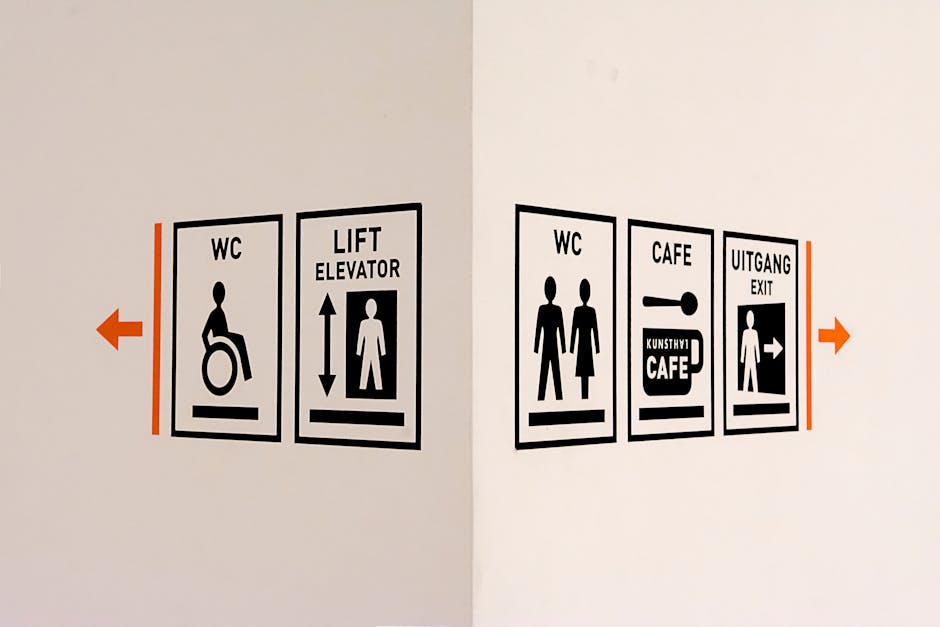
Once you enter, find the visitor desk area and ask staff: “Which elevator should we use for the main exhibition route?” Staff will usually point to the most direct lift.
2) Expect doors, thresholds, and crowd bottlenecks
Wheelchairs: watch for narrow gallery entrances, temporary barriers, and the “pinch points” near popular artworks.
Strollers: the biggest issue is often not stairs, but transitions—door frames, security gates, and paths that get crowded at peak times.
Tip: if you can, go slightly earlier than the timed slot. The museum staff will be ready, but the galleries may still be calmer.
3) Stroller strategy (so you don’t fight the museum)
For strollers, the easiest day usually means one of these:
- Keep it unfolded only where you can guarantee enough turning space.
- Use museum guidance for where strollers can stay (often they prefer strollers folded or stored in a designated area).
If you’re bringing a stroller, wear a small bag and keep it lightweight. Moving through security and tight corridors is easier when you’re not juggling everything.
4) Plan for historic “partial access” routes
Amsterdam has many historic buildings. Some museums can do step-free movement through main spaces, but not every room.
If a museum is partially accessible, you’ll usually still get the best highlights via the lift route—just confirm which sections are not reachable.
9 step-free museum routes (no backtracking)
1. Rijksmuseum – Museumplein main route
Rijksmuseum is one of the simplest for a step-free day because the building has modern visitor flow and lifts for higher levels.
Route: use the accessible visitor entrance, check in, then go straight into the main ground-floor highlights. When you hit the first “main floor” moment, take the lift up rather than trying to go around.
Once you’re on the higher level, plan your loop so you don’t backtrack: do the largest rooms first, then finish with smaller adjacent galleries near the lift core.
Good to know: if your wheelchair or stroller needs extra turning space, go for the wider gallery sections first—those tend to be easier before the rooms fill up.
2. Van Gogh Museum – enter, lift, then a single loop
Van Gogh Museum can be very manageable because it’s designed around visitor movement, with step-free routes to exhibition floors.
Route: after entry and security, follow the staff guidance to the lift area. Do the main exhibitions on one level before taking a second lift (if needed) for complementary rooms.
To avoid backtracking, choose one direction once inside (left-to-right or clockwise) and stick to it until you reach the end near the exit direction.
Good to know: if you’re using a stroller, keep it compact near the busiest painting rooms—wider corridors are more comfortable after the first gallery wave.
3. Stedelijk Museum – modern galleries with lift access
Stedelijk Museum is generally friendly for step-free touring because the museum’s layout prioritises movement between exhibition levels.
Route: enter via the step-free visitor flow, go directly to the main exhibition floor, then use lifts only when you need a new “cluster” of rooms.
Do your loop within the same level first. Save any smaller, lower-traffic rooms for the final stretch so you don’t have to re-enter crowd zones.
Good to know: ask staff where the “quietest accessible route” starts. The fastest route on paper may still be busy at peak times.
4. NEMO Science Museum – floors by lift, hands-on break included
NEMO is great for strollers and wheelchairs because it’s a science museum with clear visitor circulation and lots to do on each level.
Route: enter step-free, start on the easiest-to-reach interactive floors, then use the lift to go up for the next wave. Because it’s activity-heavy, it’s smart to build in short breaks rather than expecting a long uninterrupted run.
Plan your “single loop” by staying on one level for a while, then moving up together as a group (you’ll all arrive at the same time, which reduces waiting and manoeuvring).
Good to know: for interactive areas, staff sometimes provide guidance on which stations are accessible—ask early so you don’t waste time later.
5. EYE Film Museum – step-free access along the waterfront path
EYE is a modern museum where step-free movement is usually easier than in older historic buildings, but the key is how you reach the building and move between levels.
Route: enter using the main step-free path from the waterfront side, go straight to the information desk to confirm the easiest lift route, then tour one level before moving up.
When you plan your loop, treat EYE like a “level-by-level circuit.” That keeps you from crossing back over the same accessible corridor with a full day’s crowd.
Good to know: film/museum spaces can have seating zones—if you need space to turn, ask staff where the accessible viewing or rest areas are.
6. Hermitage Amsterdam – lift first, exhibitions in one flow
Hermitage Amsterdam can be very doable when you commit to the lift-based route and accept that some corners may not be reachable.
Route: enter step-free, check in, and identify the lift route immediately. Then follow the exhibition flow on that level, including any break points, before moving to the next lift level.
Avoid jumping between non-adjacent rooms. If an accessible route exists, it will usually take you through a connected set of galleries—stay within that chain.
Good to know: if you’re visiting with a wheelchair, ask staff which exhibition rooms are on the fully step-free path for the current show.
7. Het Scheepvaartmuseum (Maritime Museum) – main galleries via the accessible core
Het Scheepvaartmuseum is a strong choice for families and wheelchair users because it’s built around visitor movement and has step-free routes to major exhibition spaces.
Route: use the accessible entrance, go to the lift area, then start with the largest, most central galleries. From there, continue around on the same level and only use additional lift stops when you’re moving to a clearly connected section.
To prevent backtracking, map it mentally: “central rooms first, then the wings last.” End near the exit side so you finish without reversing.
Good to know: maritime museums often have models and interactive displays—some are easier from a seated position, so plan for a slower pace than an art-only museum.
8. Micropia – step-free movement with an ‘explore then rest’ rhythm
Micropia (The Museum of Microbes) is hands-on, and that usually works well for strollers—once you build a rhythm that matches the exhibits.
Route: enter step-free, start with the main galleries on the most accessible level, then continue in one direction. Use the lift only when you’re ready to switch to the next exhibition area.
Because it’s interactive, don’t try to cram everything. Choose the sections that are most interesting for your group, then finish with a calmer zone to exit smoothly.
Good to know: ask where the most accessible seating/viewing spots are. For wheelchair users, this can make a big difference in comfort.
9. Amsterdam Museum – accessible city-story route in one pass
Amsterdam Museum focuses on the city’s story, and you can have a smooth step-free visit if you stick to a lift-based loop through the main exhibition floors.
Route: enter via the step-free visitor flow, head to the main galleries on the ground or first exhibition level, then take the lift to continue. Try to avoid “skip ahead and come back” because it forces you to repeat tight transitions.
If you’re touring with a stroller, you’ll likely find it easiest to complete the busiest story areas first, then do quieter rooms afterwards.
Good to know: if you need step-free restrooms, don’t wait until the end—plan one toilet stop halfway through your museum loop.
How to combine museums without backtracking (by neighbourhood)

Do Rijksmuseum → Van Gogh Museum → Stedelijk Museum in the same general area. It reduces cross-city travel and keeps your lift/exhibition transitions local.
Central/East cluster (science + media + maritime)
If you want variety—science, film, and maritime—pair NEMO (science) with EYE (film) and Het Scheepvaartmuseum (maritime) by sequencing one “waterfront” stop after another.
The key is timing: one main museum per half-day is usually easier than stacking all three.
City centre + family-friendly science
Amsterdam Museum works well with Micropia as a family-friendly “story + hands-on learning” day.
Plan it so you enter the city centre museum first (more structured) and then end at Micropia (more interactive), or vice versa depending on your energy.
Final tips
- Arrive 10–20 minutes before your timed ticket so you can find the step-free entrance calmly.
- Use staff guidance early. One question at the start (“Which lift gets us to the main route?”) saves the most backtracking.
- For strollers, decide in advance whether you’ll fold and queue, or keep it only in the wider zones—either choice is fine, but consistency makes the day easier.
If you tell us which museums you’re most interested in (and whether you’re using a wheelchair or stroller model/type), we can suggest a tighter itinerary that fits your pace and avoids the busiest corridors.