

If you’re heading to Romania for a mix of city time (Bucharest), countryside (Transylvania), and coast (the Black Sea), you’ll want an eSIM that’s generous enough for real-life navigation and messaging. The key is not just “how many GB”, but also how reliably your phone can use 4G when you’re away from major towns.
While writing this, we focused on practical plan types that work for the way people actually travel there: using maps on the go, sharing location in chats, and sometimes turning on a hotspot when network coverage is patchy. We also compare eSIM options from Airalo, Yesim, and Drimsim because they usually show the country coverage details clearly enough to judge reliability.
1. The “Social + Maps” plan (3–5 GB) – Best for short city-first trips

In practice, 3–5 GB sounds “small”, but it can be enough if you keep your usage under control. In Bucharest, you’re usually on solid 4G. The moment you go rural, you may get slower speeds or more frequent signal gaps, so the smartest move is to rely on offline maps and avoid continuous video calls.
When you choose a plan in this category, look for wording that indicates Romania LTE/4G roaming (not just “coverage in general”). Also check the validity: a plan that lasts longer can be more comfortable than a tight plan where data runs out mid-trip.
Good to know: Download offline maps for Bucharest + your main Transylvania stops (for example Braşov, Sibiu, Sighişoara) before you lose signal, and switch navigation back to offline mode whenever the connection drops.
2. The “Road Trip Buffer” plan (8–12 GB) – Best for mixing cities, drives, and a hotspot
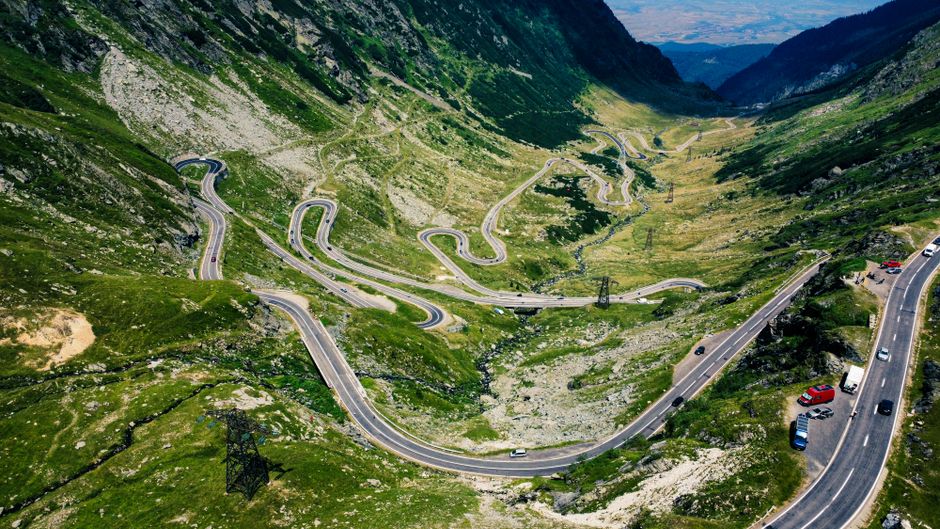
Rural Transylvania is where you feel the difference between “just enough data” and a plan that gives you room for real travel. If you’re stuck on a slower network, your phone may reload pages more than you expect. The same goes for messaging apps when the signal is inconsistent: you don’t see the extra background usage, but it adds up.
For coverage reliability, prioritize eSIMs that clearly describe which Romanian network partners they use (or at least confirm they operate on the main mobile networks). If a plan is vague—no network detail at all—it can still work, but you’re taking a bigger gamble when you go beyond the city.
Good to know: If you hotspot, do it intentionally. Turn it on only when you actually need the second device, and keep your primary device on a strong connection to avoid looping reconnections.
3. The “4G-Heavy Transylvania” plan (12–20 GB) – Best for countryside days and mountain roads

Even if Romania is generally good for 4G, rural coverage can be uneven. In valleys or near wooded areas, speeds can drop and your phone may hunt for signal. With 12–20 GB, you have a buffer for the “invisible” usage that happens in those moments: app refreshes, map re-requests when offline data is incomplete, and retrying uploads.
This plan is also a good choice if you plan to use your phone more actively—like posting stories, using rideshare apps, or doing navigation plus translation. You don’t need to stop doing those things, but it helps to choose a plan that won’t stress you out when the connection isn’t perfect.
When comparing plans in this range, check two things: (1) data validity (how long the plan lasts), and (2) whether “fair use” or speed limits apply after you use the bundle. We can’t promise performance, but these details tell you how the provider handles congestion.
Good to know: Set expectations with offline tools. Download offline routes and key places, and keep your phone’s brightness and background data usage under control in low-signal areas.
4. The “Black Sea + Day Trips” plan (10–15 GB) – Best for coastal towns and longer excursions

A 10–15 GB plan fits you if you’ll be out for long afternoons: quick directions to beaches, searching opening hours for specific places, using ride-hailing or transport info, and sending photos/video from the water. Even when the signal is good, coastal days can be surprisingly data-heavy because you’re active and sharing more.
For reliability along the coast, what matters most is not just “GB”, but also that the eSIM supports Romania’s typical roaming experience on 4G. Choose plans that clearly operate on Romanian mobile networks and don’t require you to jump through complicated settings.
Also think about your device habits. If you plan to stream music heavily, upload lots of content, or keep a laptop online via hotspot, bump into the 15 GB-ish area rather than the low end.
Good to know: When you arrive at your base (coastal city or main town), connect to local Wi‑Fi and pre-load maps + saved places for the day. Then rely on offline where possible so the eSIM doesn’t get wasted on updates.
5. The “Bring a Friend” plan (20+ GB or multi-device) – Best when you’ll share a hotspot
This is for groups, families, or anyone who wants peace of mind. If you’ll share a hotspot for a second phone/tablet, or if you’re bringing a companion who wants their own data line, a 20+ GB plan can be the most stress-free option.
The biggest downside of sharing is that network weakness makes devices reconnect more often. When that happens, both usage and battery drain increase. A larger data bundle helps, but the real trick is choosing a plan that doesn’t throttle immediately and that lasts long enough for your full itinerary.
If you’re considering a multi-device approach, check whether the eSIM you choose is meant for one device only or if it includes add-on lines. Romania travel is road-based for many people, so being able to keep multiple devices connected at once can be the difference between “we’ll figure it out” and “we’re smoothly on route”.
We also recommend being realistic about your need for continuous connectivity. If you’re mostly using maps and messaging, you can still share successfully with a big plan and offline maps. If you’re streaming and uploading constantly, you’ll want both high data and good signal planning.
Good to know: Keep one device as the “navigation hub” (stronger signal handling), and let the other device use the hotspot for specific tasks—don’t mirror everything live.
Final tips
- Prioritize plan flexibility: choose a validity period that covers your whole trip, not one that only just fits.
- Check your phone: it should be unlocked and support eSIM. Also turn on roaming for the eSIM line only (avoid accidental SIM swaps).
- Use offline maps and downloads: Romania’s rural Transylvania moments are where offline saves you more than extra GB.
- Do a quick test on day one: as soon as you reach your first stop, open maps, send a message, and confirm the speed feels usable—then adjust your usage if needed.