

If you’re looking for Dutch windmills outside of the Zaanse Schans bubble, we’ve got you. This guide is for people who want the same polder scenery, but with more local streets and easier public transport.
We picked places that are (1) reachable by train + short bus or walk, (2) good for photos from bridges and canals, and (3) have something to do on arrival—like museum mills when they’re open, plus a proper snack stop (stroopwafel, kaas, bitterballen—gezellig borrel style).
Zaanstreek alternatives to Zaanse Schans (all by train + short walks)

1. Zaandam – Zaans Museum & mill-lined Zaan canals
Zaandam is where you “start feeling” the Zaanstreek (the area around the Zaan river) without having to enter the biggest tourist patch. It’s also one of the most convenient options from Amsterdam Centraal: expect about 15–25 minutes by train to Zaandam, then follow the water and the historic streets.
What to do when you arrive: the mills and old industrial facades cluster along and around the Zaan. Walk the edges where the canals open up—those are your best photo angles, especially when the windmill sails catch the light.
For bites, keep it simple: look for a local lunch spot near the station or along the main streets and go for classics like kaas (cheese), Dutch pastries, and a quick sweet like stroopwafel. If you’re in the mood for a proper borrel, try bitterballen with mustard.
Museum-mill wise, Zaandam is a good base because it’s close to the historic mill landscape and museum programming in the wider area. Even when specific mills aren’t open, the “how it used to work” context is easier to understand here.
Good to know: if you want the calmest photos, go early morning or later afternoon—Zaanse Schans can get busy fast, while Zaandam stays more everyday.
2. Koog aan de Zaan – mill streets on the Zaan edge
Koog aan de Zaan is a strong alternative because it has windmills and heritage streets without the “theme-park crowd” feel. Trains from Amsterdam to Koog aan de Zaan are typically around 15–30 minutes depending on the connection; from the station it’s usually a short walk toward the mills and canal views.
On arrival, scan for footbridges and bends in the Zaan—windmills look best there, because you get water reflections and a sense of scale. This is also a good spot for photography if you like “working landscape” vibes rather than only postcard angles.
For bites, keep an eye out for casual eateries and snack counters around the station area. The Zaan region is known for simple Dutch comfort food; go for a warm snack and something sweet to end the walk.
Museum mills: in the wider Zaanstreek, some mills function as heritage/museum mills on specific days. Koog aan de Zaan is the kind of place where it’s worth checking what’s open before you commit to a longer detour.
Good to know: bring a compact umbrella or rain layer—open polder areas around the Zaan can feel windy even when Amsterdam itself feels calm.
3. Wormerveer – calmer mill district with canal angles
Wormerveer is an easy train hop and often a lot less packed than the better-known stops. From Amsterdam Centraal you’ll usually be looking at about 20–35 minutes by train, followed by a short local walk toward the water.
What to do: wander slowly along the Zaan edges. The best photo spots are the sections where the river widens and bridges frame the mills. If you’re after variety, combine viewpoints—walk out, shoot photos, then return slightly via a parallel street so you can compare angles.
For snacks, aim for a quick lunch (bread sandwiches, cheese, or a warm bite) and then add a sweet treat. It’s very “Dutch snack bar” territory here: simple, fast, and filling.
Museum mills: Wormerveer sits in the Zaan heritage belt, so “mill open days” and smaller exhibitions may be available depending on season. Even without that, the windmill setting is the main event.
Good to know: if you prefer staying dry, plan most of your photos around the late afternoon when light is better—wind and clouds don’t matter as much to your camera settings then.
4. Oostzaan – local edge of the polder (less touristy, more village feel)
Oostzaan gives you that “village along the water” feeling with fewer tour groups. Public transport is straightforward: expect roughly 20–40 minutes from Amsterdam by train plus a short walk, depending on which station stop you use and the exact connection.
On arrival, keep it local: focus on the residential edges toward the water where the polder landscape opens up. It’s ideal if you want quieter photos with less background clutter than the Zaanse Schans streets.
Bites here are about everyday Dutch comfort. Look for a lunch place near the route and add a classic sweet (stroopwafel is the easy choice). If you find a bakery, grab something for later—being able to picnic makes these polder walks more relaxed.
Museum mills: similar to the other Zaanstreek options—some mills have heritage programming on select days. Build flexibility into your plan rather than treating it like a guaranteed “inside visit” every day.
Good to know: wear comfortable shoes; the paths near the polder edge can be uneven, especially after rain.
5. Westzaan – small roads, big windmill views
Westzaan is a great pick if you want the windmill heritage without the crowds. It’s reachable by train (usually around 20–35 minutes from Amsterdam), then you’ll walk toward the river and the polder lanes.
What to do: take the “approach walk” seriously—some of the best windmill views happen a little away from the busiest areas, when you’re framed by dikes and water. Bridges give you the cleanest compositions; stop there and let your eyes adjust to the height difference.
For bites, plan a simple lunch and a snack. The Zaanstreek works well for “light meal now, bigger bite later” because you’ll be walking—think cheese, a warm pastry, and something sweet.
Museum mills: Westzaan is part of the broader Zaan tradition, so the chance of catching an open heritage mill can be higher than in more urban areas. Still, always check opening timing close to your day.
Good to know: if it’s sunny, check for wind-sail movement—steady sails make for crisp photos, while sudden turns can blur unless your camera is ready.
6. Krommenie – Krommenie-Assendelft area for wide polder views
Krommenie (and the Krommenie-Assendelft station area) is a practical “windmill day” base because it keeps you close to the Zaan landscape while staying away from the heaviest tourist flows.
From Amsterdam, expect around 20–35 minutes by train. Once you’re out, head toward the Zaan and look for long sightlines where windmills sit clearly against sky and water.
On arrival, your main activity is strolling and photographing—find a route that gives you both “close-up mill” moments and “wide polder” moments. If you enjoy walking, it’s easy to do a loop rather than one straight line.
For bites, choose a straightforward stop near the station or along your walking route. Dutch snack culture is your friend here: stroopwafel, bitterballen, and Dutch cheese are reliably easy to find.
Museum mills: the broader area has museum/heritage mills on some schedules. If you specifically want an inside visit, verify what’s open before you go.
Good to know: give yourself an hour of buffer for wandering—Zaanstreek windmills are spread out, and the best shots often happen when you stop longer than planned.
One classic UNESCO detour
7. Beemster – Middenbeemster dike mills & cheese-country calm
Beemster is a different kind of “windmill village” experience: it’s about the polder landscape and the ring-shaped dike structure that shapes where the mills can be seen. It’s less “industrial tourist strip” and more “classic countryside day.”
Getting there by public transport usually looks like: train from Amsterdam toward Alkmaar/Purmerend area, then bus or local connections to Middenbeemster/Beemster. Expect roughly 45–90 minutes total depending on how you connect—always check the latest timetable because buses can vary by day.
What to do: walk or cycle the paths around the dikes for sweeping views. Photo spots are typically the places where you can see the open fields plus one or more mills in the same frame. If you like architecture, the straight lines of the polder make windmills look especially graphic.
Bites: this is cheese country. Plan a simple lunch and try a local kaas option (or a dairy tasting if you’re interested). For a quick sugar hit afterward, Dutch bakeries nearby can be worth the detour.
Museum mills: Beemster’s main “museum” is the landscape itself, but there can be small-scale heritage openings and mill-related info depending on the season. If inside access matters to you, check in advance.
Good to know: bring a light layer even in summer—open fields get breezy, and shade can be limited.
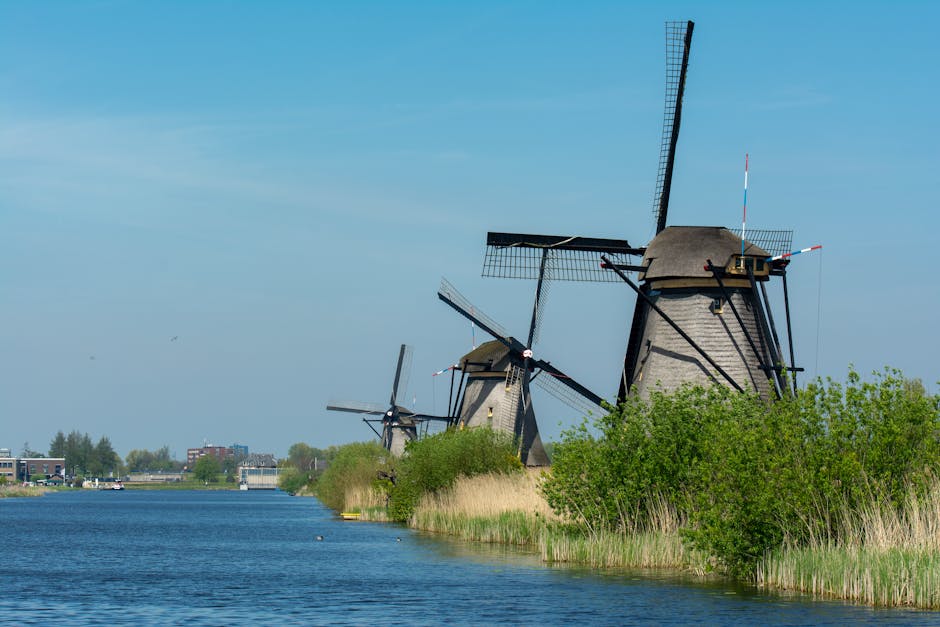
8. Kinderdijk – UNESCO windmill villages (with public transport + walk)
Kinderdijk is the big, iconic windmill day trip. You’re coming for the UNESCO windmill village look—multiple windmills clustered together, plus walkable paths and viewpoints. From Amsterdam, the journey is usually about 2 to 2.5 hours total by train + bus or water/public transport connections, depending on route.
On arrival, aim for the river-walk paths and the bridges where windmills line up. For photos, mornings are often best because you’ll get softer light and fewer crowds on the main viewing routes.
Bites here are practical: think café stops around the visitor area and simple Dutch snacks. If you’re hungry after walking, go for something warm and filling rather than trying to “snack only,” because Kinderdijk is more walking than people expect.
Museum mills: Kinderdijk is one of the places where “museum mill” talk is most relevant—some mills have visitor access and heritage information through the visitor centre network, but not all sails/mills are always accessible the same way every day. Treat it as a “check what’s open today” plan.
Good to know: wear shoes with grip; paths can be uneven near the waterline, especially after rain.
Final tips